
Single Best Answer (SBA) · Cirrhosis and Chronic Liver Disease
A patient presents with a large-volume upper GI bleed. Which of the following is a recognised cause of upper GI bleeding to consider alongside oesophageal varices?
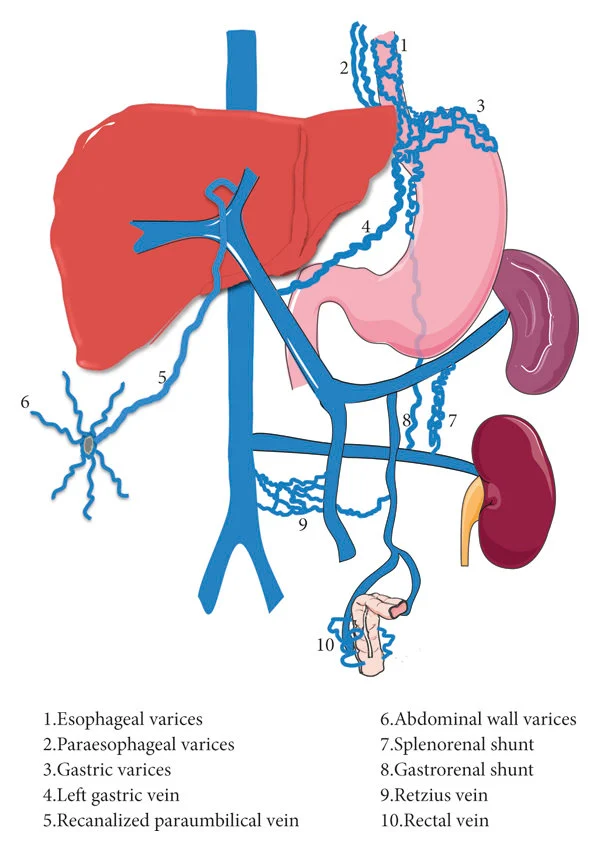
Show answer and explanation
Answer: D. A Mallory-Weiss tear at the cardia after violent vomiting
Causes of upper GI bleeding
Upper GI bleeding arises proximal to the duodenojejunal flexure. Recognising the range of causes guides endoscopic assessment.
Common causes
| Site | Causes |
|---|---|
| Oesophageal | Varices (portal hypertension), Mallory-Weiss tear (tear at the cardia after violent vomiting), reflux oesophagitis, oesophageal cancer |
| Gastric | Gastric ulcer, gastric cancer, acute gastritis |
| Duodenal | Duodenal ulcer |
| Other | Dengue fever, angiodysplasia, coagulopathy (including liver disease) |
Why the distinction matters
- In a cirrhotic, varices are the priority, but other causes (e.g. peptic ulcer) are common and endoscopy distinguishes them.
- The Mallory-Weiss tear classically follows a bout of violent vomiting/retching.
Lower GI causes (for contrast)
Diverticulosis, haemorrhoids, angiodysplasia of the colon and anal fissures cause lower GI bleeding, not upper.
Practise every Gastroenterology and GI Surgery topic
This is a free sample. Sign up for the full bank of flashcards and exam-style questions on a spaced-repetition schedule, with 20 free stars a day.
More on Cirrhosis and Chronic Liver Disease
- SBA questionA 56-year-old man who drinks half a bottle of illicit liquor daily for 10 years presents with haematemesis and altered…
- FlashcardWhat is cirrhosis, and what distinguishes compensated from decompensated cirrhosis?
- FlashcardWhat drug and endoscopic treatments are used for acute variceal bleeding, and why are antibiotics given?