
Single Best Answer (SBA) · Pancreatitis and Pancreatic Cancer
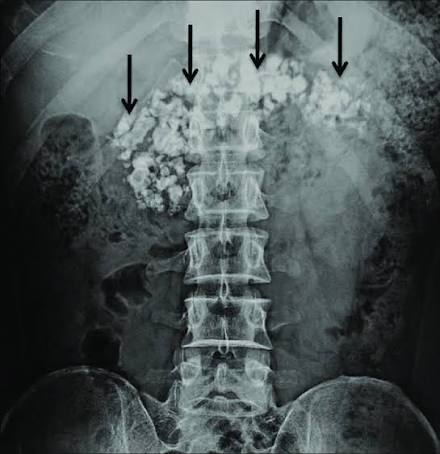
A patient with a long history of alcohol use has recurrent epigastric pain, weight loss with greasy offensive stools, and is now diabetic. Abdominal X-ray shows pancreatic calcification. What is the diagnosis?
Show answer and explanation
Answer: C. Chronic pancreatitis
Chronic pancreatitis
Recurrent epigastric pain, weight loss with steatorrhoea (greasy, offensive stools), diabetes, and pancreatic calcification form the classic picture of chronic pancreatitis (most commonly alcohol-related).
The classic triad
- Abdominal pain.
- Exocrine deficiency - weight loss and steatorrhoea (fat malabsorption).
- Endocrine deficiency - diabetes (loss of islet function).
Aetiology
- Alcohol (commonest), tropical (calcific), idiopathic, hereditary, obstructive, autoimmune; pancreatic duct stricture.
Investigation
- Serum amylase is usually normal or only mildly elevated (unlike acute pancreatitis).
- Imaging shows calcification, a dilated pancreatic duct, and complications (ultrasound, CT, MRCP).
Treatment
- Pain relief, enzyme supplementation (pancreatin) for exocrine failure, and insulin for diabetes.
Practise every Gastroenterology and GI Surgery topic
This is a free sample. Sign up for the full bank of flashcards and exam-style questions on a spaced-repetition schedule, with 20 free stars a day.
More on Pancreatitis and Pancreatic Cancer
- FlashcardWhat are the exocrine and endocrine functions of the pancreas?
- FlashcardHow is acute pancreatitis diagnosed biochemically and radiologically?
- FlashcardHow is chronic pancreatitis treated?
- FlashcardWhat is the epidemiology and aetiology of pancreatic carcinoma?
- SBA questionA 45-year-old man presents with severe constant epigastric pain radiating to the back, with vomiting. Serum amylase is…
- True/False MCQRegarding chronic pancreatitis, the following statements are TRUE: