
Flashcard · Crohn's Disease and Ulcerative Colitis
What is toxic megacolon, how is it recognised, and why is it dangerous?
Answer
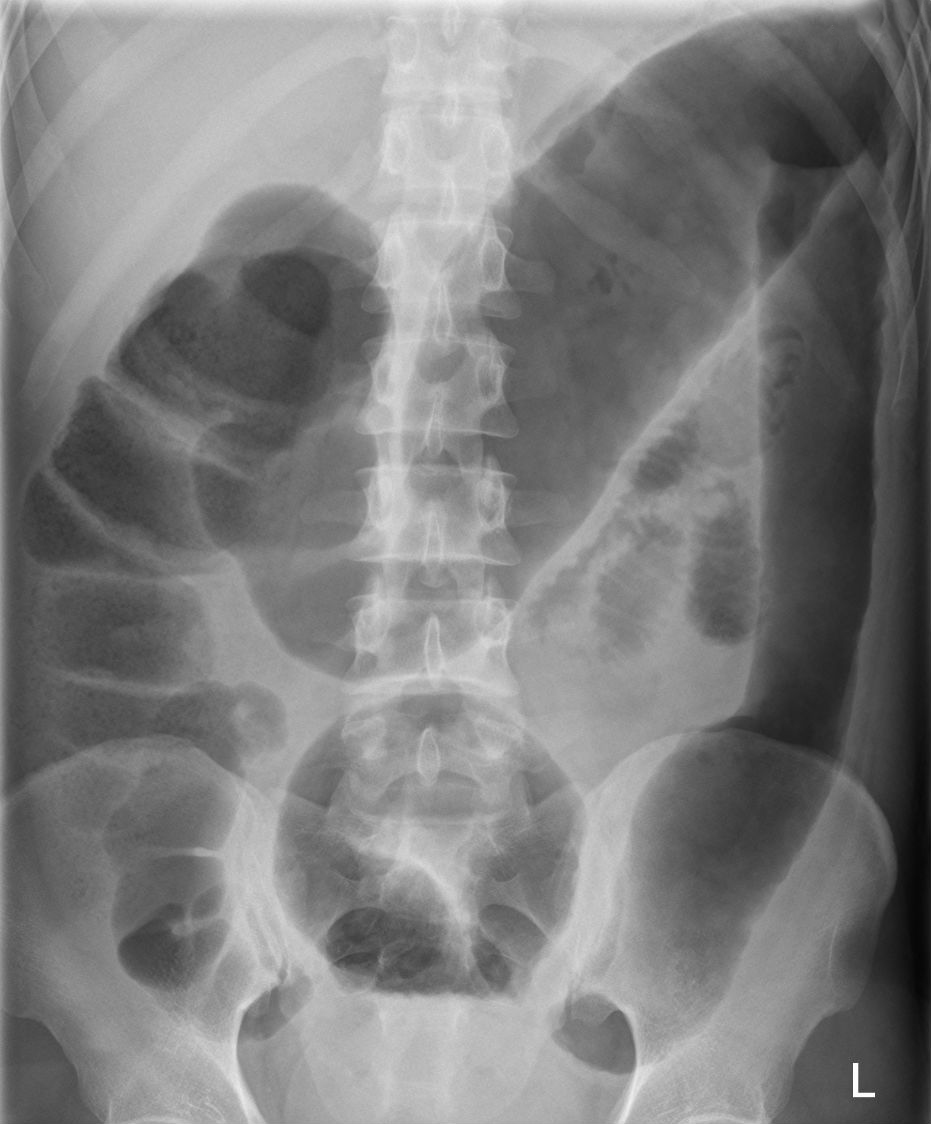
Toxic megacolon is acute non-obstructive colonic dilatation with systemic toxicity, a complication of severe colitis. Recognised by colonic diameter increasing on plain film, mucosal islands, fever, tachycardia, and abdominal distension. It is dangerous because of the high risk of perforation, needing emergency surgery.
Clinical relevance. Early recognition of toxic megacolon and timely colectomy prevent fatal perforation.
More Detail
Toxic megacolon
Toxic megacolon is a life-threatening complication of severe (usually ulcerative) colitis.
What it is
- Acute, non-obstructive dilatation of the colon with systemic toxicity ('disintegrative colitis').
- Suspected in patients with fulminant colitis (more than 10 movements/day, fever, tachycardia, continuous bleeding, anaemia, hypoalbuminaemia, distension).
Recognition
- Plain abdominal radiograph: increasing colonic diameter, mucosal islands, intramural gas.
- Clinical deterioration: sudden rise in pulse and temperature, increasing distension.
Why dangerous and management
- High risk of colonic perforation and peritonitis.
- Intensive medical therapy (IV steroids, fluids, monitoring); emergency colectomy if no rapid improvement, to avoid perforation.
Practise every Gastrointestinal Surgery topic
This is a free sample. Sign up for the full bank of flashcards and exam-style questions on a spaced-repetition schedule, with 20 free stars a day.