
Flashcard · Operative Vaginal Birth
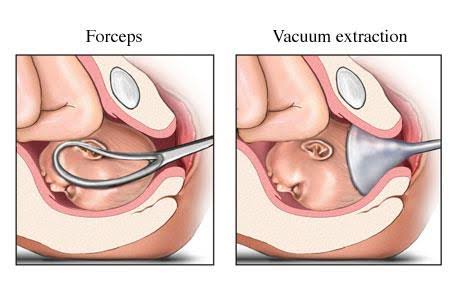
Compare the advantages and disadvantages of ventouse versus forceps.
Answer
Ventouse: less maternal perineal trauma, less anaesthesia, can assist rotation; but higher failure rate, more cephalhaematoma/subgaleal/retinal haemorrhage, needs maternal effort, not for <34 weeks or face presentation.
Forceps: higher success rate, usable at lower gestations and for the after-coming head of breech and face; but more maternal trauma (lacerations, OASIS) and more analgesia required.
Clinical relevance. Choosing the right instrument balances success against maternal/neonatal trauma; ventouse is avoided before 34 weeks.
More Detail
Ventouse versus forceps
The two instruments differ in success and trauma profile.
Ventouse (vacuum extractor)
- Advantages: less maternal trauma, often less analgesia, and can assist rotation (head flexes).
- Disadvantages: higher failure rate; more neonatal cephalhaematoma, subgaleal and retinal haemorrhage; requires maternal pushing; not used before ~34 weeks (fragile head) or for face presentation.
Forceps
- Advantages: higher success rate, no reliance on maternal effort, usable at lower gestations, and for the after-coming head of breech and mento-anterior face.
- Disadvantages: more maternal trauma - vaginal/perineal lacerations and obstetric anal sphincter injury (OASIS) - and facial bruising/transient facial nerve palsy in the neonate; needs more analgesia.
Choosing
Depends on station, position (rotational needs), gestation and operator experience; sequential use of instruments increases trauma and is avoided in favour of caesarean.
Practise every Obstetrics & Gynaecology topic
This is a free sample. Sign up for the full bank of flashcards and exam-style questions on a spaced-repetition schedule, with 20 free stars a day.