
Single Best Answer (SBA) · Endometrial Cancer and Postmenopausal Bleeding
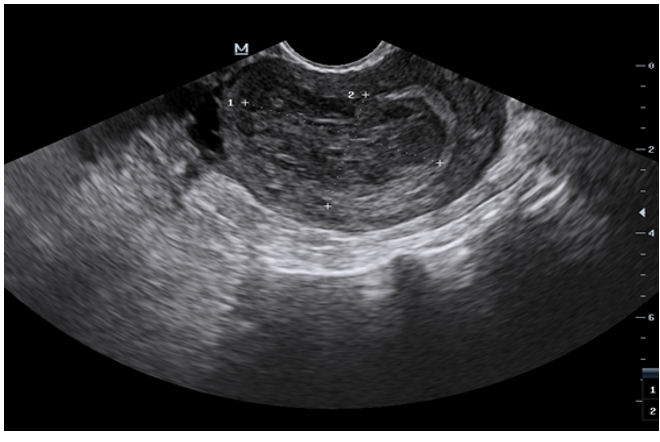
A 61-year-old woman who went through the menopause some years ago reports light vaginal spotting together with discomfort and bleeding after intercourse. On examination the cervix looks healthy and the vaginal walls appear pale, thinned and glistening. A transvaginal scan reports a normal-sized uterus and an endometrium measured at 2.5 mm. Which treatment is most appropriate for her symptoms?
Show answer and explanation
Answer: B. Topical (vaginal) oestrogen for atrophy
PMB due to atrophy
This woman has the classic picture of genital atrophy: thin, shiny vaginal epithelium, dyspareunia, post-coital spotting, a small uterus and a thin endometrium (ET 3 mm, i.e. <=4 mm).
Why topical oestrogen
- By the diagnostic algorithm, an ET <=4 mm with no focal lesion is low risk, so no further endometrial sampling is needed and the underlying cause is treated.
- Atrophic vaginitis/endometrial atrophy is the commonest cause of PMB, and is treated with topical (vaginal) oestrogen, which restores the epithelium and relieves symptoms.
Why not the others
Hysterectomy/BSO and chemotherapy are gross over-treatment for benign atrophy; with a thin endometrium an endometrial biopsy is not mandated (the algorithm allows treating the cause); the COC is not appropriate management for atrophic PMB in a postmenopausal woman.
Caveat
If bleeding persists despite treatment, re-evaluate with sampling - persistent PMB always warrants endometrial assessment regardless of initial thickness.
Practise every Obstetrics & Gynaecology topic
This is a free sample. Sign up for the full bank of flashcards and exam-style questions on a spaced-repetition schedule, with 20 free stars a day.