
Single Best Answer (SBA) · Ovulatory Disorders
According to the Rotterdam criteria, how many features are required to diagnose polycystic ovary syndrome (PCOS), and what are they?
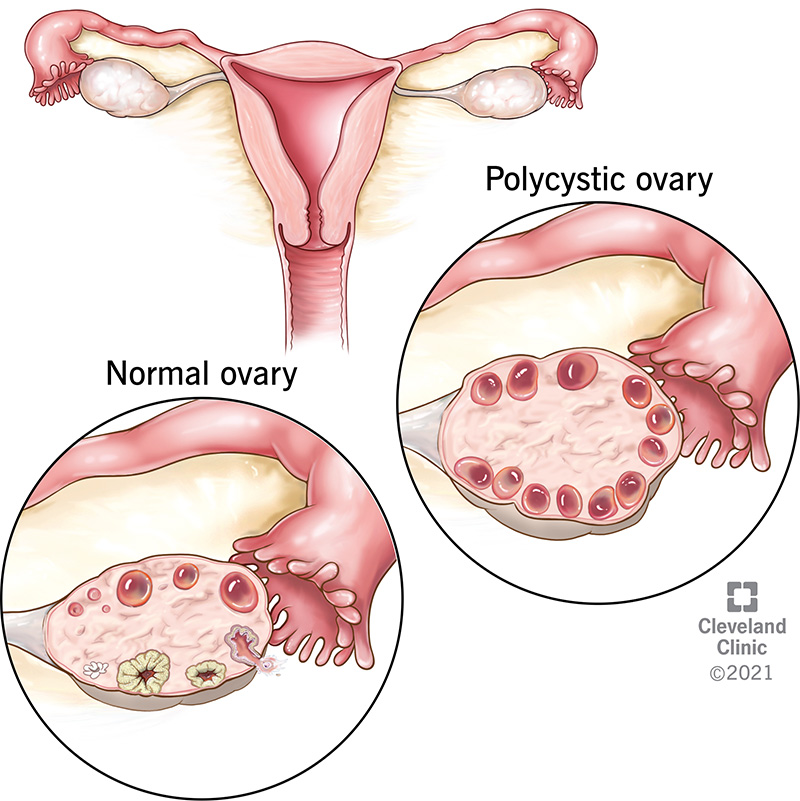
Show answer and explanation
Answer: C. Two of three: clinical/biochemical androgen excess, oligo/anovulation, polycystic ovarian morphology on ultrasound (after excluding other causes)
Diagnosing PCOS (Rotterdam criteria)
PCOS is diagnosed when two out of three of the following are present, after excluding other causes:
- Clinical and/or biochemical androgen excess - hirsutism, acne; raised testosterone.
- Oligo-ovulation or anovulation (oligo/amenorrhoea).
- Polycystic ovarian morphology on ultrasound - originally >=12 follicles (2-9 mm) per ovary and/or ovarian volume >10 ml (the 2018 update used 20 follicles per ovary as the cutoff).
Exclusion of mimics
Before diagnosing PCOS, exclude late-onset congenital adrenal hyperplasia, androgen-secreting tumours, Cushing's syndrome and androgenic drug use.
Why not the others
It is not all three (any two suffice), nor any one alone; a raised LH:FSH ratio or polycystic ovaries on ultrasound alone is insufficient - polycystic morphology can occur in women without the syndrome.
Practise every Obstetrics & Gynaecology topic
This is a free sample. Sign up for the full bank of flashcards and exam-style questions on a spaced-repetition schedule, with 20 free stars a day.
More on Ovulatory Disorders
- FlashcardWhat are the clinical features of PCOS?
- True/False MCQRegarding ovulation induction and ovarian hyperstimulation syndrome (OHSS), the following statements are correct:
- FlashcardWhat are the long-term and metabolic consequences of PCOS, and how are they managed?
- SBA questionInsulin resistance plays a central role in the pathophysiology of PCOS. Which statement best describes its effect?