
Flashcard · Red Cell Alloimmunisation in Pregnancy
What three stages are required for haemolytic disease of the newborn (HDN) to occur?
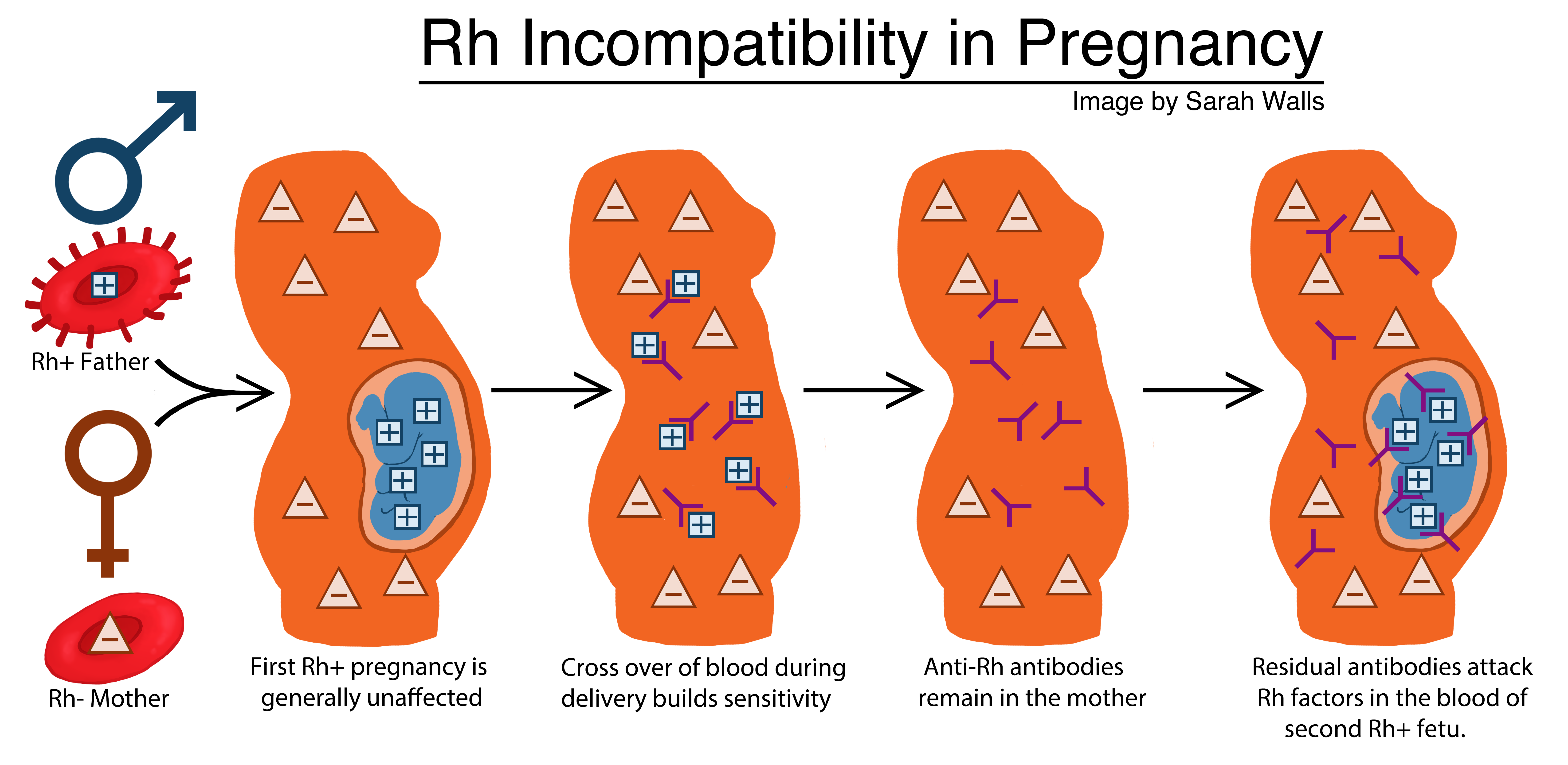
Answer
- The fetus inherits a paternally-derived red-cell antigen that is foreign to the mother (e.g. RhD-positive fetus of an RhD-negative mother)
- A sufficient volume of fetal red cells enters the maternal circulation to stimulate a maternal immune response (sensitisation)
- Maternal IgG antibodies cross the placenta and cause immune destruction of the fetal red cells -> fetal anaemia
Clinical relevance. Understanding the three stages explains why the first sensitising pregnancy is usually spared and prevention targets sensitisation.
More Detail
Pathophysiology of HDN
Haemolytic disease of the newborn requires three sequential events.
The three stages
- Antigen inheritance - the fetus inherits a paternal red-cell antigen foreign to the mother (classically RhD - an RhD-positive fetus of an RhD-negative mother).
- Sensitisation - a sufficient volume of fetal red cells reaches the maternal circulation (feto-maternal haemorrhage) to stimulate a maternal immune response.
- Transplacental antibody and haemolysis - maternal antibodies (IgG) cross the placenta, bind fetal red cells, and the fetal reticuloendothelial system destroys them, causing fetal anaemia.
The immune response
- The primary response is weak and IgM (does not cross the placenta) - so the first sensitising pregnancy is usually unaffected.
- The secondary response is IgG, which crosses the placenta and affects subsequent pregnancies.
- Once sensitised, the woman remains sensitised for life.
Practise every Obstetrics & Gynaecology topic
This is a free sample. Sign up for the full bank of flashcards and exam-style questions on a spaced-repetition schedule, with 20 free stars a day.
More on Red Cell Alloimmunisation in Pregnancy
- SBA questionA clinician contrasts ABO haemolytic disease with Rhesus disease. Which single statement about ABO haemolytic disease…
- SBA questionA neonate with Rh haemolytic disease has rapidly rising unconjugated bilirubin despite phototherapy, approaching…
- True/False MCQConcerning the diagnosis and monitoring of fetal anaemia in alloimmunisation, which of the following statements are…
- FlashcardHow is fetal RhD status determined antenatally, and what maternal serology is done?